
Table of Contents
Tap to View
Exterior house painting is one of the most visible home improvements a property owner can undertake in Bangalore. However, achieving crisp, lap-free paint coats, sharp window borders, and seamless texture finishes requires absolute stability. Painters balancing on rickety ladders or suspended wooden planks cannot achieve uniform paint coverage. Selecting the right staging answers the question: Which scaffolding is best for painting?
⚡ The Professional Consensus
For exterior residential and commercial building painting in Bangalore, Modular H-Frame Scaffolding with Perforated Steel Jalis is the undisputed champion. It provides an unobstructed walking corridor, integrated climbing rungs, and the ideal working distance from the wall.
1. Why H-Frame Scaffolding Dominates Exterior Painting
Painting requires continuous lateral motion. Unlike masonry or slab casting, which involves concentrated static weight, a painter walks back and forth along the wall elevation maintaining a "wet edge" to prevent visible overlap lines. Here is why H-frames excel:
- Walk-Through Portal Design: Traditional pipe-and-clamp setups have diagonal sway tubes crossing right through the walkway, forcing workers to crawl under pipes. H-frames keep braces on the outer perimeter, leaving the entire walking deck 100% clear.
- Built-In Ladder Access: Each H-frame standard features horizontal crossbars spaced at 300mm intervals, serving as a rigid, non-slip ladder for climbing between tiers.
- Optimal Wall Distance: The standard 1.2m frame width allows you to position the working deck exactly 200mm to 300mm away from the wall—the ergonomic sweet spot for roller painting without straining the lower back.
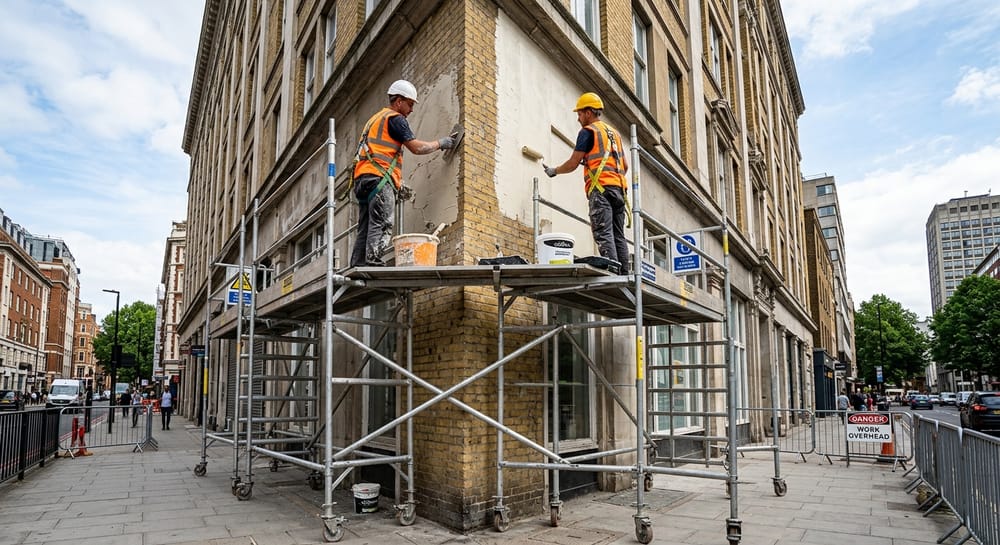 Figure 1: Full-width steel walking decks ensure painter safety and allow both hands to be used for perfect coating application.
2. Best Scaffolding Systems by Painting Application
Review the ideal staging matches across various residential and commercial painting scenarios:
| Painting Scenario | Recommended Scaffolding System | Why It Outperforms Alternatives | Typical Hire Rate |
|---|---|---|---|
| Exterior Residential Facade (G+1 to G+3) | Modular H-Frame System + Steel Jalis | Unobstructed walking corridor, built-in access rungs | ₹650 - ₹950 / set / mo |
| Double-Height Living Rooms & Foyers | Aluminium Mobile Scaffolding Tower | Polyurethane wheels protect marble, zero paint spills | ₹800 - ₹1,400 / day |
| High-Rise Apartment Repainting (10+ Fl) | Engineered Cuplock Staging + Debris Net | Withstands wind shear, protects cars from overspray | ₹16 - ₹22 / sq.ft / mo |
| Spot Facade Repairs & Texture Touch-Up | Single Bay H-Frame Tower on Base Jacks | Assembles in 20 mins, minimal street obstruction | ₹3,500 - ₹5,000 / week |
3. Three Must-Have Scaffolding Accessories for Painters
When ordering painting scaffolding in Bangalore, always verify that your rental package includes:
- Perforated Steel Walkway Jalis (Chali Planks): Never allow painters to stand on loose wooden timber planks that can warp, crack, or slip off frames. Galvanized steel jalis have punched anti-skid dimples and integrated end-hooks that lock securely over frame tubes.
- Full-Length Guardrails & Toe-Boards: A 150mm steel toe-board along the outer edge stops paint trays, putty knives, and water bottles from being accidentally kicked off the edge onto the ground below.
- Green Debris Mesh (Shade Netting): Essential for preventing fine atomized paint overspray from drifting onto neighboring properties in windy Bangalore afternoons.
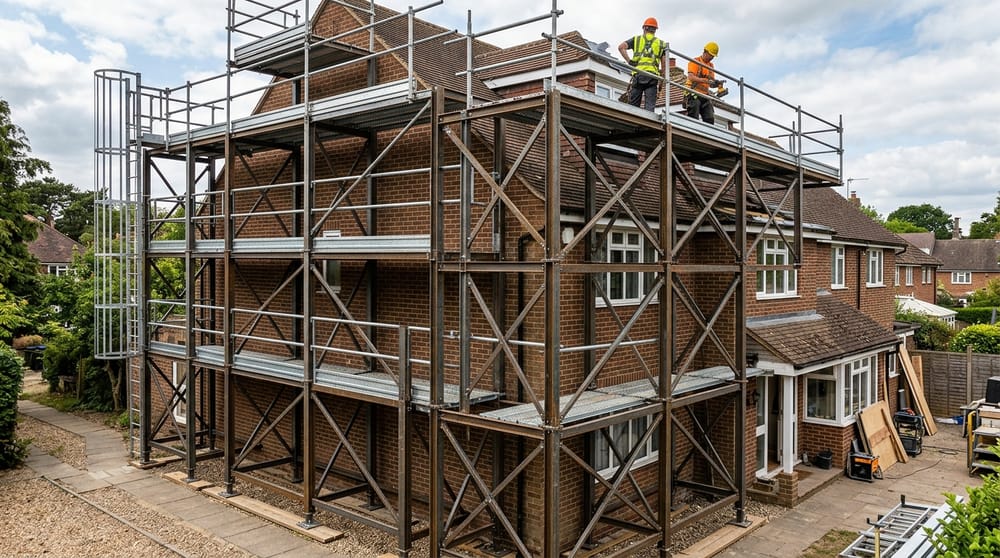 Figure 2: Modular H-frames provide clear, uninterrupted access lines for seamless exterior wall finishing.
Frequently Asked Questions: Best Scaffolding for Painting
H-frames feature an open walk-through portal without diagonal braces crossing the middle of the platform. This allows painters to walk smoothly down the entire facade with roller extension poles without ducking, speeding up painting by 40%.
Under Indian safety standards, an exterior painting platform must be at least 600mm wide (two standard 300mm steel jali planks side by side). This provides enough space for a painter to move freely while safely holding a paint bucket or roller tray.
Yes. Any working platform exceeding 1.8 to 2.0 meters in elevation requires top guardrails at 1.0m height, intermediate mid-rails at 0.5m, and perimeter toe-boards to prevent falls and bucket drops.