
Table of Contents
Tap to View
When specifying staging for a Bangalore project, civil contractors frequently weigh the classic structural dilemma: Aluminium vs. Steel Scaffolding. Mild steel has long been the backbone of heavy Indian civil engineering, renowned for its brute load-bearing capacity and rock-bottom rental prices. Meanwhile, lightweight structural aluminium alloys are rapidly taking over tech parks, airport terminals, shopping malls, and cleanroom maintenance. Understanding when to deploy each material is crucial for balancing worker ergonomics with project profitability.
⚡ Core Trade-Off
Steel Scaffolding is unbeatable for heavy civil construction, RCC slab casting, brick masonry, and long-term external facade projects where low monthly cost and high load capacity are paramount. Aluminium Scaffolding is the clear champion for interior maintenance, high ceilings, corporate fit-outs, and short-term tasks where rapid mobility and non-marking floor protection are mandatory.
1. The Case for Steel Scaffolding: Unrivaled Strength & Economy
High-grade mild steel (complying with IS 2750 / IS 1161) remains the dominant choice across Bangalore construction sites in Peenya, Whitefield, and Sarjapur for three decisive reasons:
- Massive Load-Bearing Capacity: A single Cuplock steel standard can support up to 3 tonnes of vertical axial load. When casting a 200mm thick RCC transfer slab or stacking 500 red clay bricks on a working platform, steel provides absolute structural safety.
- Impact & Abuse Resistance: Heavy concrete mixers, swinging crane loads, and falling vibrators will not dent or rupture thick 3.2mm wall steel pipes.
- Unbeatable Rental Economics: Steel scaffolding rents for as low as ₹14 to ₹24 per square foot of facade coverage per month, making it feasible to keep on site for 6 to 12 months.
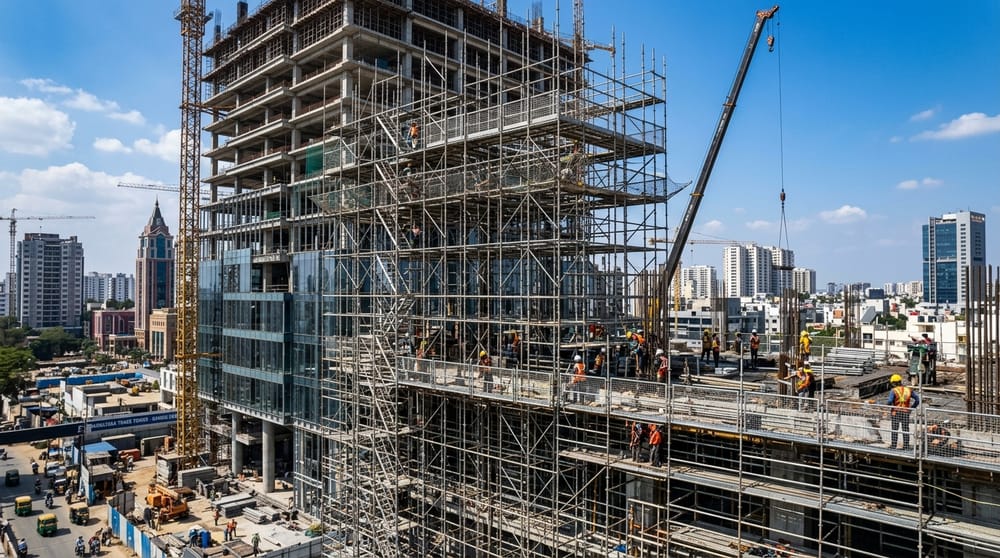 Figure 1: Heavy steel scaffolding provides the raw structural rigidity required for multi-storey civil framing.
2. The Case for Aluminium Scaffolding: Ergonomics & Speed
Manufactured from aerospace-grade 6082-T6 aluminium alloy, aluminium scaffolding offers distinct modern advantages:
- 65% Lighter Tare Weight: An aluminium frame weighs roughly one-third of its steel counterpart. Two technicians can carry an entire 6-meter tower through narrow corridors and up stairwells without motorized hoists.
- Lightning-Fast Assembly: With snap-lock color-coded braces, an 8-meter double-width aluminium tower can be fully erected in less than 20 minutes with zero tools or wrenches.
- 100% Corrosion Immunity: Aluminium naturally forms a protective oxide layer, making it completely impervious to monsoon downpours and chemical atmospheric pollution.
- Cleanroom & Tech Park Compliance: In IT corridors like Electronic City and Bellandur, facility managers forbid rusty steel inside carpeted or server-dense spaces. Aluminium towers leave zero stains or metal filings.
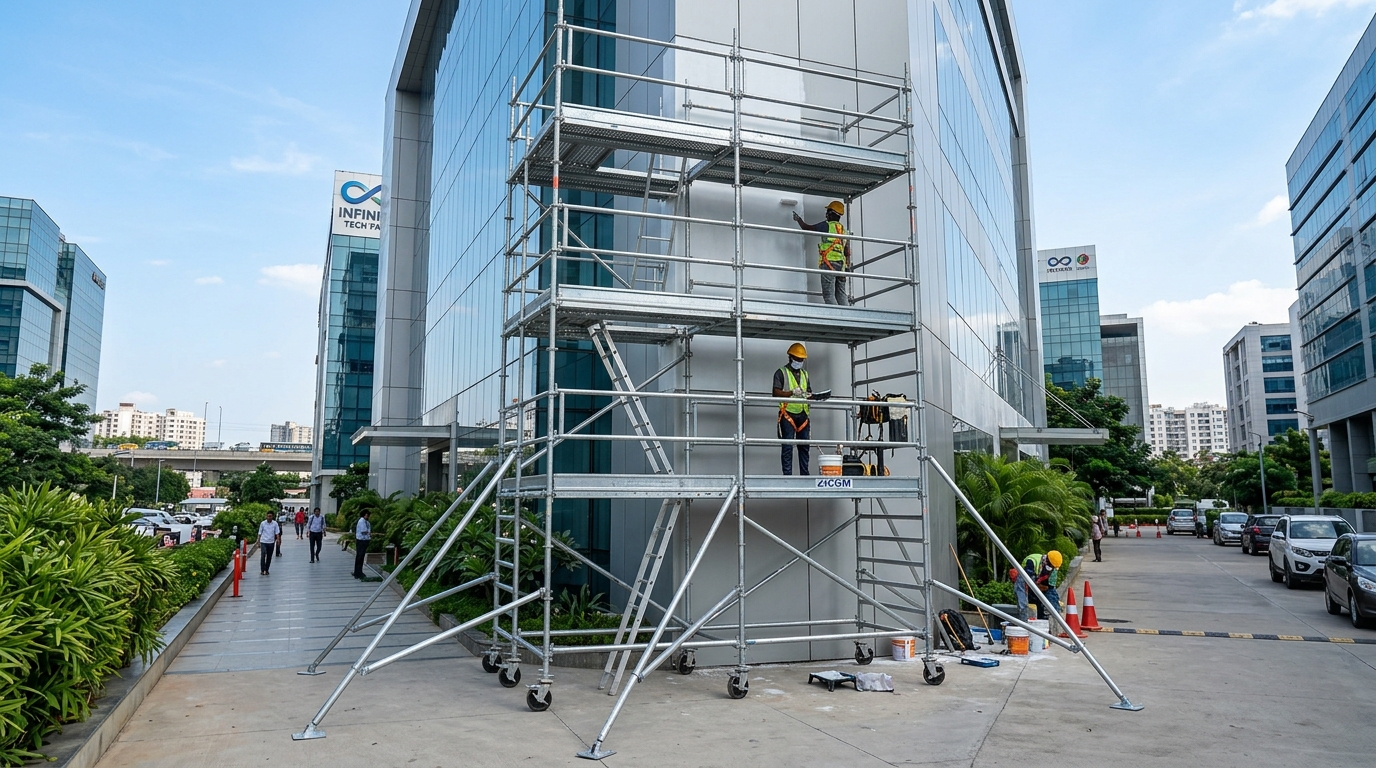 Figure 2: Clean, non-marking aluminium towers are the gold standard for indoor tech park fit-outs and atriums.
3. Head-to-Head Technical Comparison
Compare the mechanical and commercial characteristics of both metals:
| Feature | Industrial Steel Scaffolding | Structural Aluminium Scaffolding | Winner |
|---|---|---|---|
| Material Tare Weight | Heavy (~20-25 kg per standard/pipe) | Ultra-Light (~6-8 kg per frame) | Aluminium (65% lighter) |
| Max Safe Working Load | Heavy Duty (Up to 3,000 kg/leg) | Medium Duty (Up to 275 kg/platform) | Steel (Superior civil load capacity) |
| Corrosion & Weathering | Prone to rust if paint is scratched | 100% Rust-proof (Self-passivating oxide) | Aluminium (Immune to rain corrosion) |
| Mobility & Assembly Speed | Requires 3-4 laborers to assemble | 2 workers can assemble in 15 mins | Aluminium (Fastest mobilization) |
| Floor Surface Protection | Requires heavy wooden spreaders | Non-marking polyurethane wheels | Aluminium (Safe for marble & tiles) |
| Monthly Rental Cost | ₹14 - ₹24 / sq.ft (Very Affordable) | ₹800 - ₹1,800 / day (Premium hire) | Steel (Far more economical for long jobs) |
Frequently Asked Questions: Aluminium vs Steel Scaffolding
Aluminium raw material costs 3 to 4 times more than mild steel, and the precision TIG/MIG robotic welding and cold-formed alloy fittings (grade 6061-T6 / 6082-T6) carry higher manufacturing capital costs, reflected in higher daily rental rates.
Yes, but because aluminium is lightweight, outdoor mobile towers must be anchored with heavy-duty outrigger stabilizer arms and ballast weights when tower height exceeds 3 times the base width.
Steel scaffolding is rarely permitted inside active sterile environments due to heavy rust particles, paint flaking, and grease. Clean aluminium mobile towers are mandatory in hospitals, IT tech parks, pharmaceutical plants, and food processing facilities.