
Table of Contents
Tap to View
When planning maintenance, electrical installations, or facade inspections across commercial facilities in Bangalore, project managers face an important operational choice: Mobile Scaffolding vs. Traditional Scaffolding. While traditional static scaffolding remains irreplaceable for wrapping entire building envelopes, renting a mobile tower on heavy-duty lockable castor wheels can save hundreds of man-hours when work involves moving sequentially between different spots in a large warehouse, factory floor, or office complex.
⚡ The Decision Rule
Use Mobile Scaffolding when your work is localized, sequential, and located on flat paved surfaces (e.g. replacing lights down a 100-meter warehouse aisle). Use Traditional Static Scaffolding when your work requires continuous simultaneous access across an entire wall elevation or rough outdoor ground.
1. What is Mobile Scaffolding?
A mobile scaffolding tower consists of lightweight aluminium or modular steel frames resting on four high-capacity swivel castor wheels equipped with dual-pedal brakes. Key features include:
- Tool-Free Snap-On Braces: Color-coded horizontal and diagonal braces lock into frame rungs via spring-loaded triggers.
- Trapdoor Platform Decks: Plywood or aluminium decks with hinged access hatches allow workers to climb up internally within the protected tower envelope.
- Outrigger Stabilizers: Telescopic stabilizer arms clamp to the four corners, creating a broad footprint that prevents overturning in compliance with EN 1004 / IS 4014.
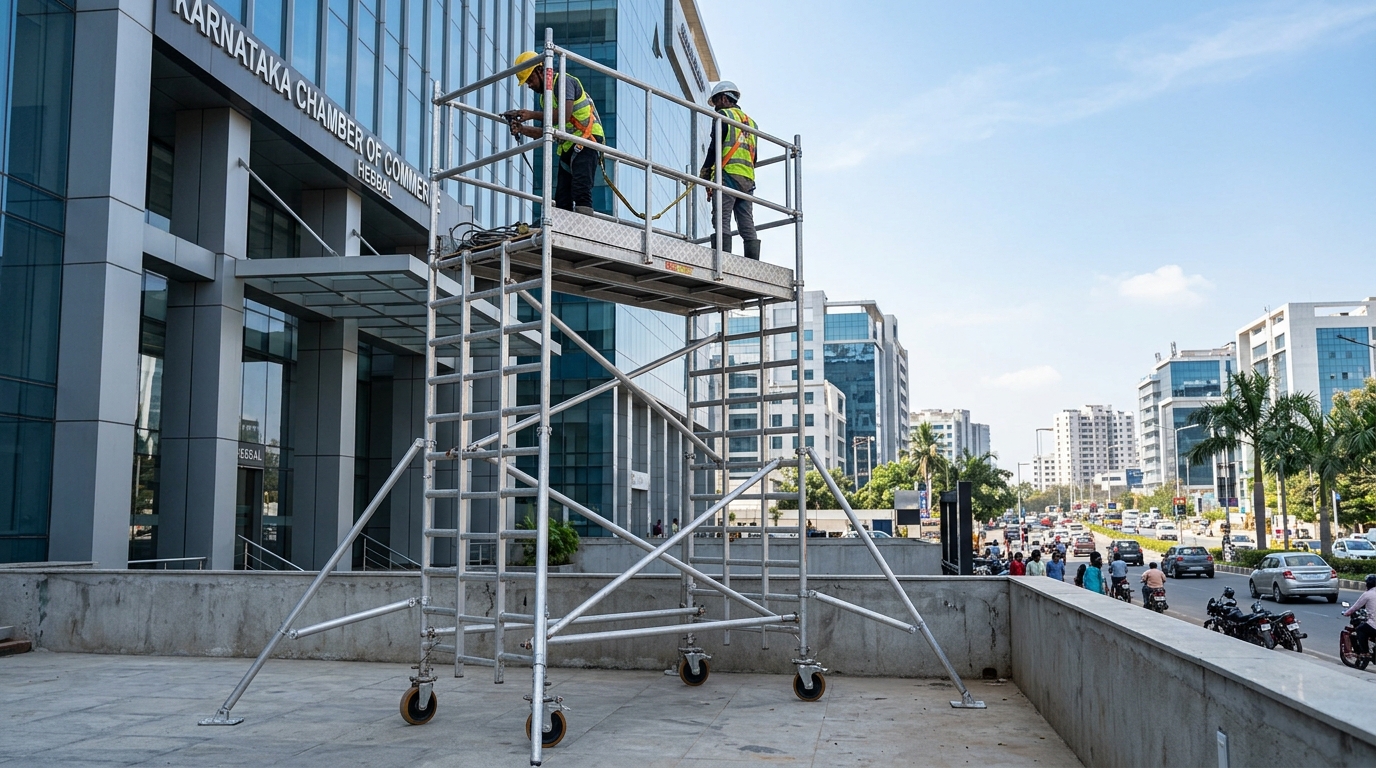 Figure 1: Mobile towers can be unlocked, rolled to a new work point in 60 seconds, and re-locked instantly.
2. What is Traditional Static Scaffolding?
Traditional scaffolding is an anchored, stationary framework of MS tubular pipes, Cuplock standards, or H-frames resting on universal base plates. It is tied directly to the building's structural columns or masonry walls using anchor fasteners, forming a rigid external skin that wraps entire facades.
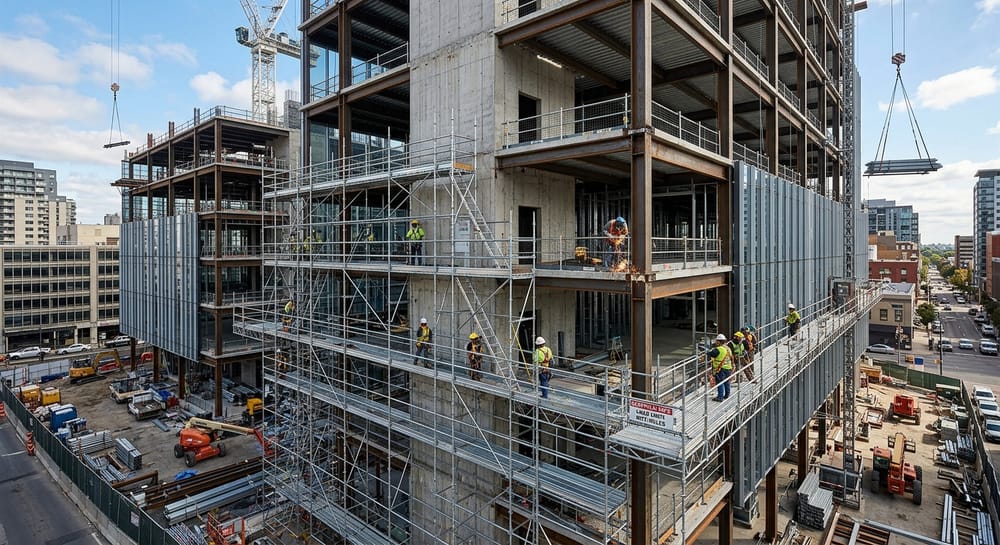 Figure 2: Static staging allows dozens of masons, plasterers, and painters to work simultaneously across multiple floors.
3. Side-by-Side Comparison Matrix
Evaluate which system aligns with your operational parameters:
| Operational Factor | Mobile Wheel-Mounted Tower | Traditional Static Scaffolding | Winner by Application |
|---|---|---|---|
| Setup & Dismantle Speed | 15 - 30 minutes total | 1 to 3 days for full elevation | Mobile (Instant setup for fast jobs) |
| Repositioning Across Site | Roll on 8-inch caster wheels in 2 mins | Requires full teardown and re-erection | Mobile (Drastic labor savings) |
| Max Working Height | Typically up to 12-14 meters safely | Virtually unlimited (Tied to building) | Traditional (Best for high-rises) |
| Ground Surface Requirement | Hard, flat, level concrete/asphalt | Can be leveled on mud, slopes & steps | Traditional (Handles rough terrain) |
| Simultaneous Work Area | Single isolated 2m platform area | Continuous 360-degree perimeter reach | Traditional (Multi-crew operations) |
4. Top Bangalore Use Cases for Mobile Towers
Mobile towers are the preferred hire choice for:
- Warehouse Logistics Parks: Servicing high-bay racking and sprinkler systems in Hoskote and Bommasandra.
- Tech Park Atriums: Cleaning glass skylights and changing HVAC filters in Bellandur and Whitefield.
- Shopping Malls & Retail: Hanging festive seasonal banners and repositioning spotlights.
- Aircraft Hangars & Metro Stations: Structural inspection of curved roof trusses without interfering with ground passenger movement.
Frequently Asked Questions: Mobile vs Traditional Scaffolding
STRICTLY NO. Moving a mobile tower while any person, tools, or materials are on the working deck is a severe violation of Indian Directorate General of Factory Advice Service and Labour Institutes (DGFASLI) safety regulations and causes immediate tip-over.
Commercial mobile towers utilize 150mm or 200mm heavy-duty polyurethane-tired castor wheels equipped with dual-action foot brakes that lock both wheel rotation and swivel rotation simultaneously.
No. Mobile towers require a flat, solid, level concrete, paved, or asphalt surface to roll safely. On soft construction mud or uncompacted earth, traditional static scaffolding with screw base jacks and timber sole boards must be used.