
Table of Contents
Tap to View
Applying exterior weatherproof paint, elastomeric coatings, or textured silicone finishes to a multi-storey building in Bangalore requires meticulous surface preparation and flawless execution. Painting contractors who attempt to cut corners by using rope cradles or rickety ladders inevitably produce patchy coverage, unsightly lap lines, and roller streaks. Professional painting demands a rigid, stable staging framework. Discover the essential best practices for scaffolding for exterior wall painting that guarantee exceptional finishing and zero safety incidents.
⚡ Key Takeaway
Exterior painting staging must provide an unobstructed 600mm wide walkway positioned 200mm to 300mm from the wall, equipped with perforated steel jalis, double guardrails, and green debris mesh to control overspray.
1. The Four Technical Demands of Exterior Painting Staging
Unlike other trades, painters require continuous lateral mobility and precise ergonomics:
- Continuous Lateral Transit: To maintain a wet edge when applying exterior emulsion across a 15-meter facade, a painter must walk steadily along the wall. Obstructions like diagonal sway braces crossing the walkway destroy paint continuity.
- Rapid Water Drainage: High-pressure facade jet-washing blasts hundreds of liters of water against the wall. Walking decks must have perforated holes so water drains immediately without creating slip hazards.
- Close Wall Proximity: Staging must sit exactly 200mm to 300mm from the plaster line so painters can reach eaves, cornices, and window reveals without leaning over guardrails.
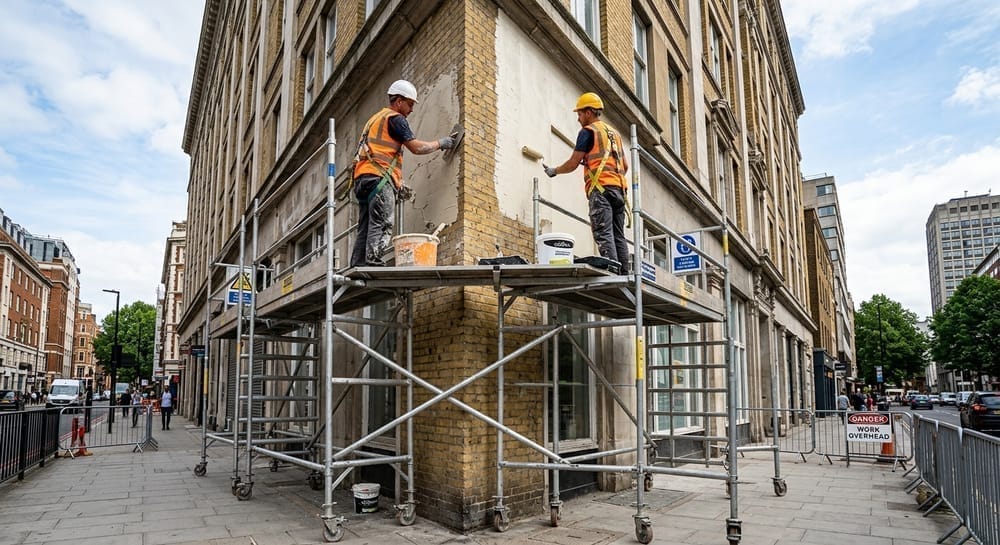 Figure 1: Full-perimeter painting staging allows uninterrupted roller coverage across complex elevations.
2. Scaffolding Specifications by Painting Operation
The matrix below outlines the exact staging configuration required for each step of the painting cycle:
| Painting Trade Task | Required Platform Clearance | Scaffolding Feature Needed | Why It Matters |
|---|---|---|---|
| Pressure Jet Power Washing | 300mm from wall face | Perforated steel jali planks (anti-skid) | Water drains immediately through perforations |
| Crack V-Groove Chasing & Putty | 200mm from wall face | Solid handrails at 1.0m height | Enables close, steady two-handed precision work |
| Exterior Primer Application | 250mm from wall face | Unobstructed H-frame walk corridor | Allows smooth, continuous roller strokes without lap marks |
| Topcoat Weatherproof Texture Coat | 200mm from wall face | Full-height green debris netting | Blocks wind gusts and traps airborne paint mist |
3. Preventing Neighbor Disputes: The Importance of Safety Netting
In dense Bangalore residential areas like Indiranagar and Koramangala, painting a facade without protective netting is an invitation to costly neighbor claims. Fine droplets of exterior acrylic paint carried by breezy afternoon winds can coat luxury cars parked in adjacent driveways. We supply certified high-density polyethylene (HDPE) green debris mesh that encloses the entire scaffolding face, containing 98% of airborne paint mist.
 Figure 2: Tight-weave debris netting provides privacy, wind reduction, and complete paint overspray containment.
Frequently Asked Questions: Scaffolding for Exterior Wall Painting
Wooden planks absorb water, split along grain lines without warning, and can slide off steel frames when wet. Perforated steel walkway jalis feature pressed end-hooks that physically latch onto scaffolding tubes, eliminating slip and flip risks.
The optimal distance is between 200mm and 300mm (8 to 12 inches). Placing it closer restricts roller handle movement, while placing it further than 300mm creates an unsafe fall gap between the platform and the building.
It acts as an environmental screen: it shades painters from Bangalore's intense mid-day sun, reduces wind turbulence that causes rapid paint skinning, and prevents atomized paint spray from coating neighbor vehicles.