
Table of Contents
Tap to View
External cement plastering is the primary protective armor of any building in Bangalore. A high-quality 20mm double-coat sand-faced plaster repels torrential monsoon rains, insulates masonry walls, and creates a perfectly flat, plumb surface for exterior paints. However, plastering is one of the heaviest trades in civil construction. Wet cement mortar weighs approximately 2,100 kg per cubic meter. Using flimsy, under-designed staging results in dangerous platform sagging, cracked finishes, and fatal accidents. Here is the authoritative guide to scaffolding for plastering work.
⚡ Civil Engineering Rule
External plastering STRICTLY REQUIRES Double Scaffolding (Independent Scaffolding) with a load rating of at least 300 kg/m² (Class 4). Never permit single putlog scaffolding that leaves holes in your newly laid brickwork.
1. Why Single Putlog Scaffolding is Forbidden for Plastering
In traditional rural masonry, workers used "single scaffolding" where a single line of vertical poles was erected 1.2 meters from the wall, and horizontal wooden or steel poles (putlogs) were inserted into holes left in the brick mortar joints. For external plastering, this is disastrous:
- Permanent Water Leakage Points: When the putlogs are removed, the leftover holes must be patched hastily. These patches crack over time, allowing Bangalore's heavy monsoon rains to seep directly into the interior bedrooms.
- Plaster Flaws & Visible Patches: It is impossible to trowel a seamless, plumb plaster coat when structural pipes are penetrating right through the wet mortar line.
Double Scaffolding utilizes two parallel rows of standards (inner and outer) connected by transoms, resting entirely on the ground. It touches the building only via non-penetrating clamping ties, leaving the masonry facade 100% clear for smooth rendering.
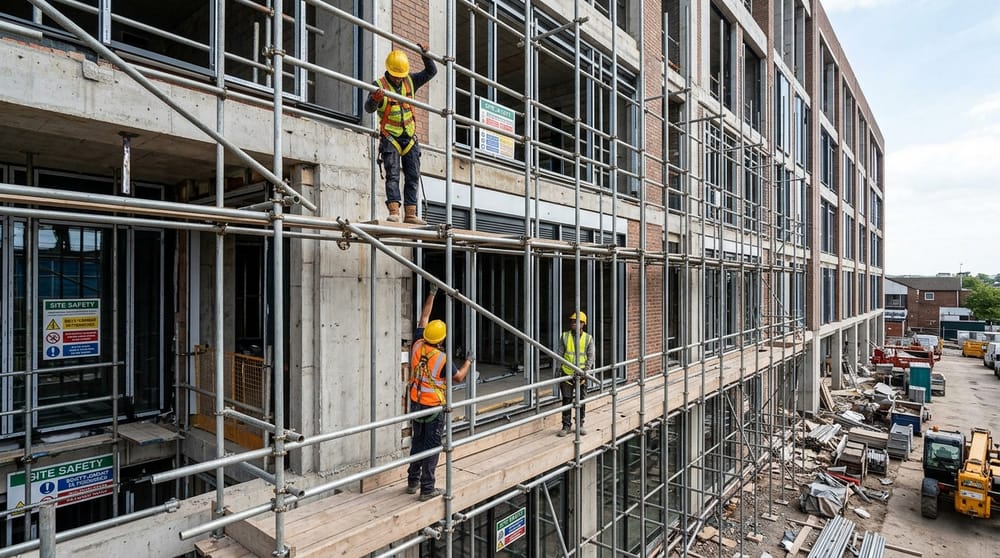 Figure 1: Heavy-duty independent double scaffolding eliminates wall penetrations and bears heavy wet mortar loads.
2. Single vs. Double Scaffolding Comparison
Understand the critical structural differences between these two methodologies:
| Plastering Parameter | Single Scaffolding (Bricklayer) | Double Scaffolding (Mason/Plasterer) | Why Double is Essential for Plastering |
|---|---|---|---|
| Wall Penetration | Puts putlogs inside masonry holes | Completely independent (Zero wall holes) | Leaves smooth wall surface ready for waterproofing |
| Safe Working Load | 150 kg/m² (Light Duty) | 300 kg/m² (Heavy Duty Class 4) | Can hold multiple heavy wet mortar pans safely |
| Vertical Standard Rows | Single row (uses wall for support) | Two independent rows of standards | Total structural independence and rigidity |
| Working Platform Width | Single plank (~300mm) | Double or Triple planks (600 - 900mm) | Sufficient space for mason, helper & mortar tub |
| Wall Clearance | Directly touching wall | Adjustable 150mm - 250mm gap | Perfect distance for 3m aluminium screed rule |
3. Designing the Ergonomic Plastering Platform
External plastering is physically demanding work. Ensuring correct platform geometry dramatically improves daily plaster output:
- Three-Plank Platform Width (900mm): Allows the mason to stand along the inner plank, place the heavy mortar pan on the middle plank, and leave the outer plank clear for the helper to deliver fresh tubs from the hoist.
- 150mm - 200mm Wall Clearance: Leaves precise space for the plasterer to draw a 3-meter aluminium floating straightedge (screed rule) vertically and horizontally across the gauge buttons without catching on vertical standards.
- Toe-Boards (150mm High): Stops wet mortar and trowels from sliding off the platform edge onto helpers below.
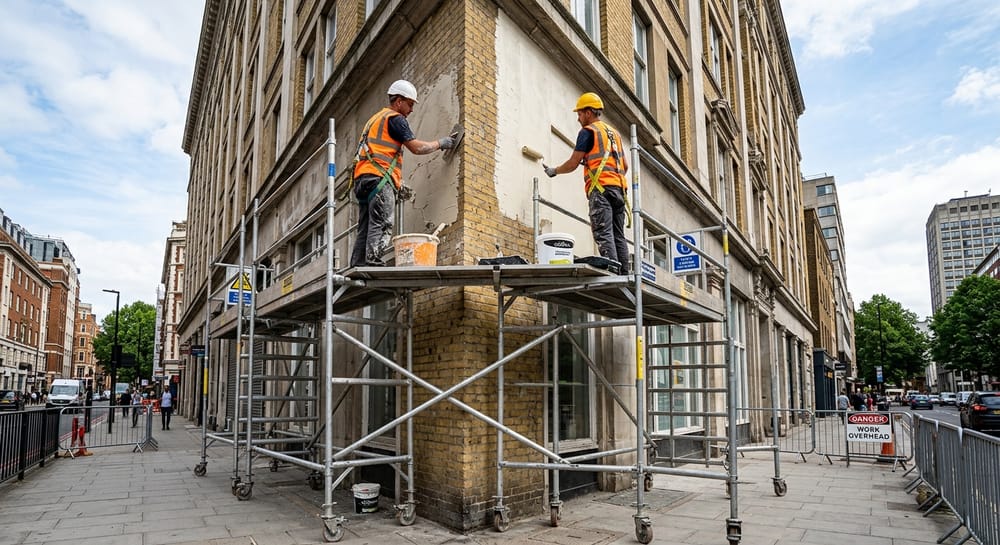 Figure 2: Broad, non-slip perforated steel walking jalis provide the stable footing needed for heavy plaster screeding.
Frequently Asked Questions: Scaffolding for Plastering Work
Single scaffolding requires "putlogs" (horizontal support tubes) inserted directly into holes knocked into the brick wall. Leaving putlog holes damages the brickwork, creates permanent water leakage pathways, and makes seamless plastering impossible. Double scaffolding is 100% self-supporting with zero wall penetrations.
Under Indian Standard IS 2750, plastering scaffolding must be rated as Class 4 Heavy Duty (3.0 kN/m² or approx. 300 kg/m²), capable of supporting the combined weight of two plasterers, a helper, and heavy metal pans of wet cement-sand mortar.
The ideal clearance is 150mm to 200mm (6 to 8 inches). This allows plasterers to reach down comfortably to the bottom of the lift with their trowel and maneuver a 2.5m or 3m aluminium leveling screed without striking the scaffold pipes.